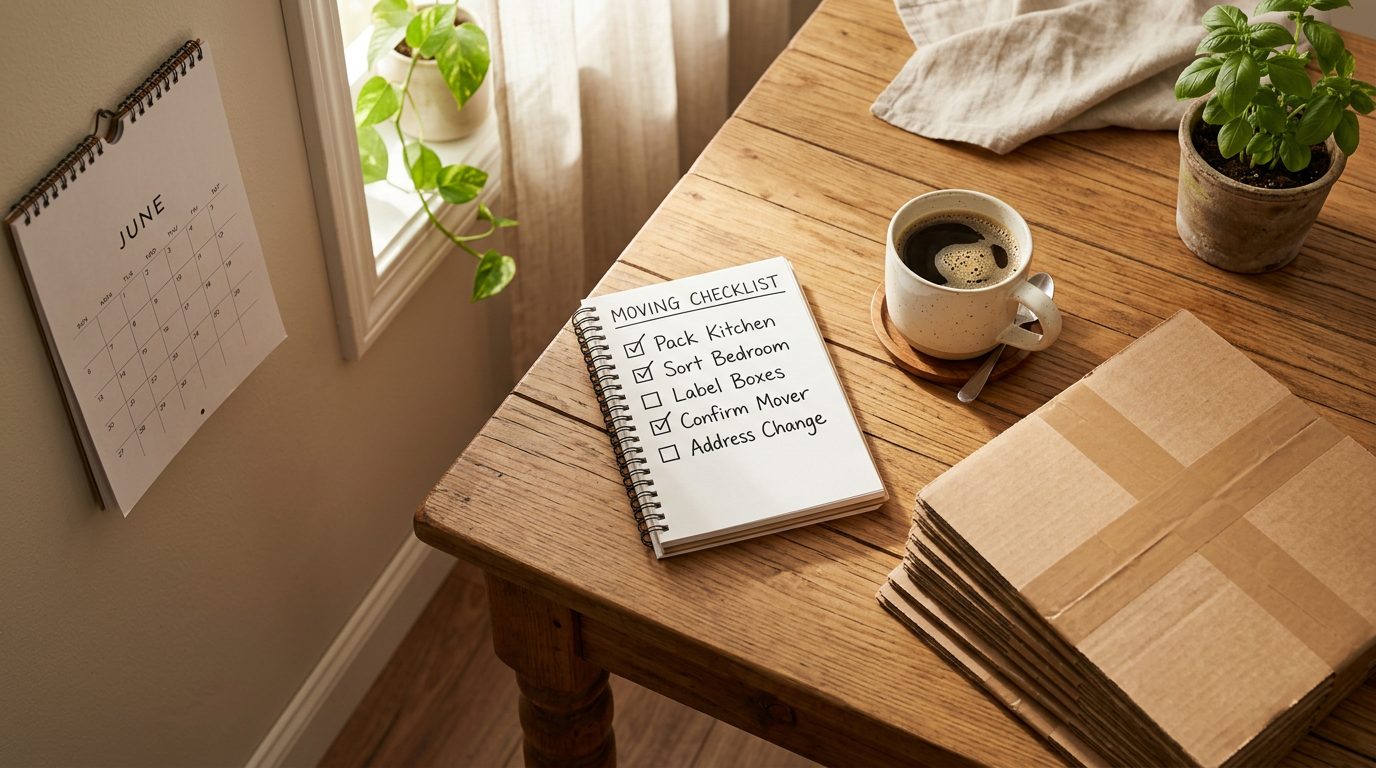
Most people wait too long to start thinking seriously about their move, then spend the final week scrambling to catch up. A realistic timeline starts about two months out for a local move, closer to three months for a long distance one, though the exact pace depends on how much you own.
Here is how that timeline actually breaks down, and where experienced movers can make a real difference along the way.
| Timeframe | What To Do | |----------------|-------------------------------------------------------------------------| | Two Months Out | Sort belongings and decide what type of moving help fits your situation | | One Month Out | Book your crew and lock in an upfront, itemized quote | | Two Weeks Out | Pack the bulk of your home, starting with off-season items and decor | | Moving Week | Confirm details, finish everyday packing, set aside your must-have box | | Move Day | Stay available and let the crew handle the loading and reassembly |
Two Months Out: Sorting and Planning
Two months before your move date is the right time to start thinking rather than boxing. Walk through each room and get a rough sense of what is coming with you and what is not, and start thinking about which type of moving help actually fits your situation, whether that is a full crew and truck, a packing crew, or just labor to load a truck you already have.
This is also a smart time to start collecting boxes, tape, and packing paper if you plan to do any of the packing yourself. Sorting through closets and garages now, rather than the week of, means you are not making decisions about what to keep while simultaneously trying to fit everything into boxes.
Two months feels early. It sets the pace for everything that comes after it.
One Month Out: Booking Your Crew and Confirming Details
By the one-month mark, your move date should be locked in and your crew booked. This is the point where you want an upfront quote in hand, one that states whether you are being priced by the hour for a local move or by weight and mileage for a long distance one, along with what is included, like equipment, disassembly, and floor protection.
Think through any special items in your home too: a piano, a large safe, or oversized furniture, since these affect both pricing and crew size. If your move-out and move-in dates are not lining up, this is the right time to look into storage rather than scrambling for a solution later.
This is also a good window to start asking questions if anything about your move feels unusual, a parking situation is tricky, or a piece of furniture will not fit through a doorway the normal way. Getting ahead of it now means nobody is solving that problem on move day itself.
Two Weeks Out: Packing the Bulk of Your Home
With two weeks left, the bulk of your packing should be underway. Off-season items, decor, books, and anything you do not use daily should already be boxed and labeled.
Fragile items deserve real attention at this stage. Wrap them individually, use proper padding, and do not rush it.
If packing feels like more than you have time for on top of everything else, this is a good point to bring in help rather than waiting until the final week when time runs out. Our packing team can take on part of a home or the whole thing.
Moving Week: Final Details and Confirmations
The week of your move is for confirming details, not starting new tasks. Call to confirm your move date, time, and any address specifics like stairs, narrow streets, or parking restrictions the crew should know about ahead of time, and finish packing the everyday items you have been using right up until now.
Set aside your moving day must-have box during this week too, with chargers, toiletries, a change of clothes, and any key paperwork tied to the move itself. Keeping it separate from everything else means you are not searching for basic necessities the moment you walk into your new home.
Move Day: What to Expect
On the actual day, your focus should be on being available and answering any questions the crew has, rather than trying to pack a last-minute box while the truck is being loaded. A crew that knows Pittsburgh's hills and narrow one-way streets will already have a plan for parking and access.
Furniture disassembly and reassembly, floor and doorway protection, all of that should already be part of what you booked. Move day is mostly about staying out of the way and letting the crew do the work you are paying for, with your must-have box and key paperwork close by rather than sitting on the truck.
It helps to have your phone nearby too, in case the crew needs a quick answer about where something goes in the new place.
When Storage or Long Distance Timing Changes the Plan
Not every move fits neatly into a single timeline, especially when a long distance move or a storage gap is part of the picture. Long distance moves generally need more lead time for booking, since pricing is based on weight and mileage rather than an hourly rate, and coordinating a specific delivery window takes more planning than a same day local move.
If your move-out and move-in dates do not align, build storage into your timeline early rather than waiting for a last minute panic. Climate-controlled storage with flexible terms means your belongings are looked after properly no matter how long the gap ends up being, and knowing that piece is handled ahead of time takes one more variable off your plate.
Frequently Asked Questions
How far in advance should I start planning a move?
Start around two months out for a local move and closer to three months for a long distance move. The exact timeline depends on how much you own and whether your dates involve storage or a long distance carrier.
When should I book my moving crew?
Book your crew about one month before your move date. This gives you time to get an upfront quote, confirm pricing details, and flag any special items like a piano or oversized furniture ahead of time.
What should I do the week of my move?
Confirm your move date, time, and any address details like stairs or parking restrictions. Finish packing everyday items, and set aside a moving day must-have box with chargers, toiletries, and key documents.
Does a long distance move need more lead time than a local move?
Yes. Long distance moves are priced by weight and mileage rather than by the hour, and coordinating a specific delivery window generally takes more planning than a same day local move.
The earlier you start, the calmer your move day looks. When you are ready to lock in a date, WeMove Pittsburgh is available seven days a week to build a timeline around your specific move. Contact us or call (412) 838-4495 whenever you are ready to talk through it.